
Scientific Viability, Moral Legitimacy, and the Ethics of Biotechnological Deployment
Oct 09, 2026By Declan Li
San Marino High School | Caltech Demirer Laboratory

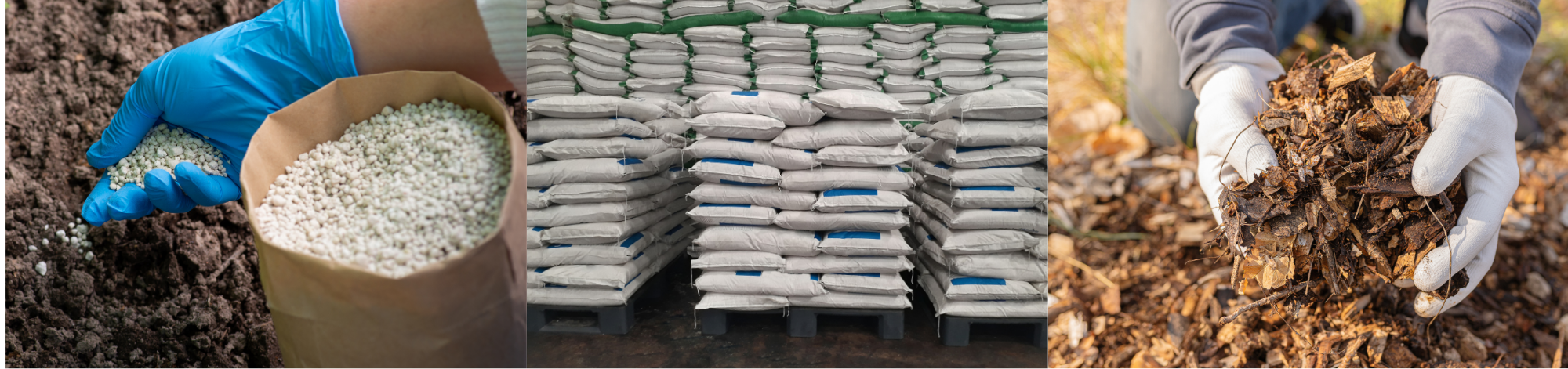
One of the most pivotal advancements in human technology was the Haber-Bosch process. This process, invented by German chemist Fritz Haber in the early 20th century and industrially scaled by Carl Bosch, allowed for food to be grown at an unprecedented rate. It currently feeds half of the world (Smil, 2001; Gao & Cabrera Serrenho, 2023; see also Erisman et al., 2008) and produces 150 million tons of ammonia per year (Fernandez & Hatzell, 2020). However, it also consumes nearly one to two percent of global energy output (Kyriakou et al., 2020). It's the largest human source of nitrous oxide (Tian et al., 2020), a gas which is 273 times more potent than carbon dioxide (IPCC, 2021). The fertilizer this process produces also leaches chemicals into our waterways (Diaz & Rosenberg, 2008) and slowly destroys the conditions in which our food is grown.
The Alternative Already Exists
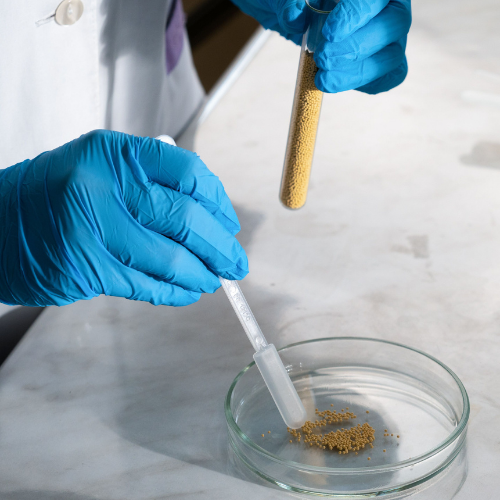
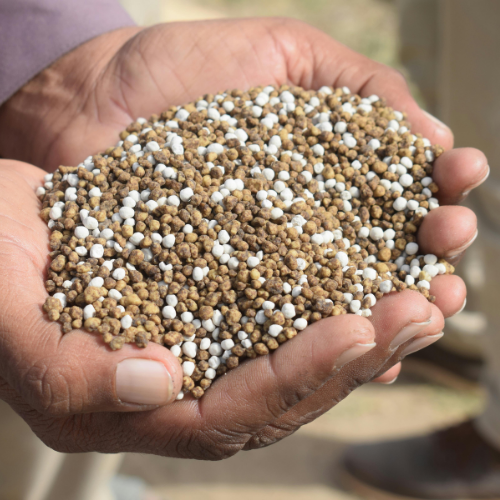
Biofertilizers are bacteria such as Azotobacter vinelandii which fix nitrogen from the atmosphere in the soil, without the immense energy cost (Aasfar et al., 2021). They exist as alternatives, and have been researched and proven for over three decades. Despite this, the global fertilizer market (valued at USD 144.50 billion in 2024) had chemical fertilizers accounting for USD 141.97 billion of it (Fortune Business Insights, 2026). This leaves biofertilizers as a niche in comparison to global agriculture. The current technological limitations of biofertilizers and the economical disadvantages they hold in agriculture are the typical explanations for this gap. And these explanations are true: biofertilizers do fall short when it comes to shelf life, they are less reliable across various growing conditions, and integrating them into an infrastructure specifically made for Haber-Bosch is a real challenge.
A Philosophical Problem
Economics explains why biofertilizers aren't used now, but cannot explain how they will deploy. Today's industry evaluates products and new technology on performance, just like Haber-Bosch over a century ago. This conflation between scientific viability and moral legitimacy is a structural feature of the industry. So, even when economic barriers drop, biofertilizers will deploy in the same way Haber-Bosch fertilizer did, and their true costs will only become clear once they're everywhere and almost impossible to reverse. This is a philosophical problem, and this paper hopes to diagnose this issue and propose a solution to it, as it's important to answer these questions now while biofertilizers remain a niche.

An Aesthetic Industry

In Either/Or, Søren Kierkegaard outlines different ways of viewing the world (Kierkegaard, 1843/1987). The first gives the perspective of the aesthete, or individuals who make decisions based on possibility and pleasure, without adhering to any moral criterion. The second is the ethical, or individuals who subject decisions to a moral framework, rather than doing merely what is possible in the present moment. Individual researchers are not all aesthetes; in fact, many are motivated by a genuine want to help others. The real issue stems from institutional incentives that are already organized around asking inherently aesthetic questions. Questions on whether a product sells, scales, or can raise yields are asked at every stage of development. The industry does not ask, however, whether a product should be deployed, or for whom. A technology only proves itself as genuinely good if the people who are in a position to gain also pay its costs. Unfortunately, this is rarely the case: the firm captures the profit, the farmer's land gets destroyed, and future generations inherit the environmental harm. Ultimately, the people who pay the price are never in the room where the decisions are made.


Good for Whom?
Focusing specifically on the ‘for whom?’ question, Aristotle argued that an object's excellence cannot be separated from its purpose (Aristotle, 1908, 1097b). Regardless of how perfectly a biofertilizer works, it is not yet a good product until you know exactly whose field it was meant to serve, whether it does that well, and what serving them costs. These are questions that must be answered before development or deployment, not after everything is already done.

Shifting the Burden of Proof
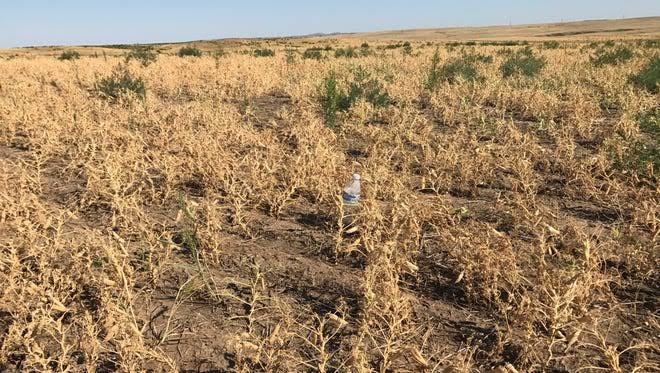
This warrants a shift in the questions that are asked. During the wake of the Green Revolution, Hans Jonas saw that the impacts of modern technology had outpaced traditional moral frameworks. His response was to base ethics on responsibility; his heuristics of fear argued if the consequences are uncertain and large enough, the burden of proof must shift to the product itself to prove why it ought to be deployed (Jonas, 1979/1984, p. 24). If biofertilizers were to be deployed at scale, microbiomes in our soil would be changed and economic relationships between manufacturers and farmers would be altered in ways that are difficult to reverse. This is not to say biofertilizers shouldn't be deployed, but it demonstrates that the question of whether something ought to be deployed cannot be answered by the same framework built to ask whether a product works.
A Legitimacy Threshold
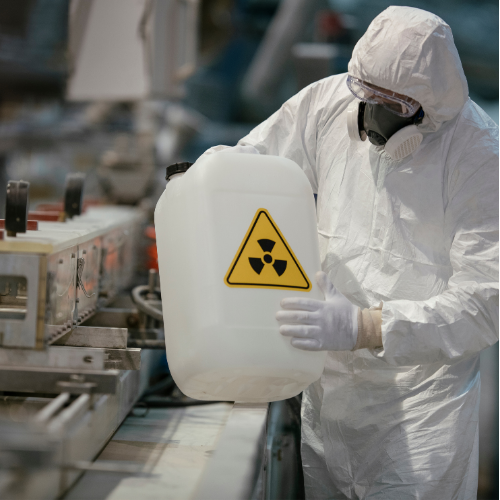
So Jonas proposes a shift, but not how one could be implemented. The solution requires a change in the structure itself, specifically a separate legitimacy threshold that needs to be cleared in order to deploy technology. Modern regulation assesses whether a technology is safe and legal, which only gives a company approval to act but not the justification for their decisions. And this justification matters only before a product is pushed out, so the threshold must come before regulatory review, not alongside it or after. Its test comes from a principle Kant articulated in Perpetual Peace: that any maxim which cannot survive being made public is unjust (Kant, 1795/1996, 8:381). The test isn't about answering the questions correctly, but if the decision to deploy could be publicly stated without defeating itself.

In practice, the threshold comes down to three questions a company must answer before deployment:
1. Who benefits from this product, and are these the people the technology was originally made to benefit?
2. Who do the costs fall upon, including the risk of failure at scale, and did they provide fully informed consent?
3. What is this technology meant to solve, and is it the right solution?


These questions are answered on record, with an independent body holding the authority to act on them. If the deployment of a product would cause severe and irreversible harm to people who have not consented or cannot, that body holds a veto against the deployment, regardless of the benefits the product may promise.
Testing the Threshold
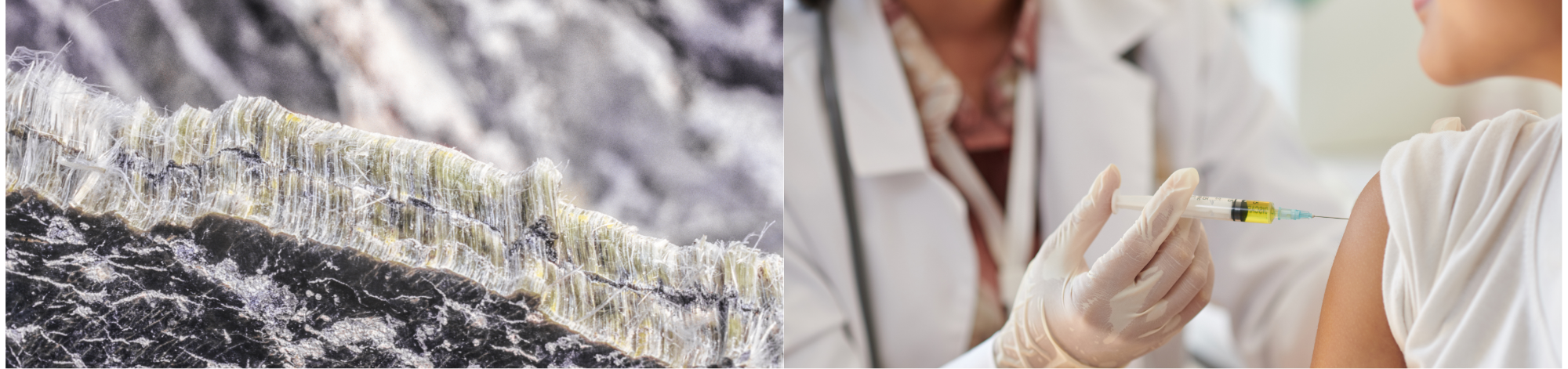
Two examples can show what the threshold would have done differently. 1950s asbestos hurt workers and their families who were never informed, and the benefits of it went to the manufacturers and builders. Answering the threshold could have revealed the asymmetry decades before litigation was able to, and a veto could have prevented the disaster asbestos created. But also consider mRNA vaccines: these vaccines did pass large phase 3 trials, but were authorized before long-term data ever existed. This meant the risk fell on a population who consented without long-term data. But in this case, if the threshold were strictly applied, the vaccine may have been delayed, putting millions of lives in danger. The threshold's power heavily relies on where the line of “severe and irreversible” is drawn, and the framework doesn't draw that line for you.
Beyond Fertilizer

This problem is not unique to fertilizers. Agricultural biotechnology is great at giving a clear view of this issue, but it will also be found in every field where the impacts of technology advance faster than the moral frameworks built to judge them. Treating the question of moral legitimacy as its own distinct question that comes before the question of scientific viability is the structural change that could solve this problem. Haber-Bosch was never asked whether it should be deployed; tomorrow's technology should have to answer before it is.
References:
Aasfar, A., Bargaz, A., Yaakoubi, K., Hilali, A., Bennis, I., Zeroual, Y., & Meftah Kadmiri, I. (2021). Nitrogen fixing Azotobacter species as potential soil biological enhancers for crop nutrition and yield stability. Frontiers in Microbiology, 12, 628379. doi.org/10.3389/fmicb.2021.628379
Aristotle. (1908). Nicomachean ethics (W. D. Ross, Trans.). Clarendon Press. (Original work published ca. 350 B.C.E.)
Diaz, R. J., & Rosenberg, R. (2008). Spreading dead zones and consequences for marine ecosystems. Science, 321(5891), 926–929. doi.org/10.1126/science.1156401
Erisman, J. W., Sutton, M. A., Galloway, J., Klimont, Z., & Winiwarter, W. (2008). How a century of ammonia synthesis changed the world. Nature Geoscience, 1, 636–639. doi.org/10.1038/ngeo325
Fernandez, C. A., & Hatzell, M. C. (2020). Economic considerations for low-temperature electrochemical ammonia production. Journal of the Electrochemical Society, 167(14), 143504.
Fortune Business Insights. (2026). Fertilizers market size, share & industry analysis, by type, by form, by mode of application, by crop type, and regional forecast, 2025–2032 (Report No. FBI114571). fortunebusinessinsights.com
Gao, Y., & Cabrera Serrenho, A. (2023). Greenhouse gas emissions from nitrogen fertilizers could be reduced by up to one-fifth of current levels by 2050 with combined interventions. Nature Food, 4, 170–178. doi.org/10.1038/s43016-023-00698-w
Intergovernmental Panel on Climate Change. (2021). Climate change 2021: The physical science basis. Contribution of Working Group I to the Sixth Assessment Report of the Intergovernmental Panel on Climate Change. Cambridge University Press.
Jonas, H. (1984). The imperative of responsibility: In search of an ethics for the technological age. University of Chicago Press. (Original work published 1979)
Kant, I. (1996). Toward perpetual peace: A philosophical project. In M. J. Gregor (Ed. & Trans.), Practical philosophy (pp. 311–351). Cambridge University Press. (Original work published 1795)
Kierkegaard, S. (1987). Either/or (H. V. Hong & E. H. Hong, Trans.). Princeton University Press. (Original work published 1843)
Kyriakou, V., Garagounis, I., Vourros, A., Vasileiou, E., & Stoukides, M. (2020). An electrochemical Haber-Bosch process. Joule, 4(1), 142–158. doi.org/10.1016/j.joule.2019.10.006
Smil, V. (2001). Enriching the earth: Fritz Haber, Carl Bosch, and the transformation of world food production. MIT Press.
Tian, H., Xu, R., Canadell, J. G., Thompson, R. L., Winiwarter, W., Suntharalingam, P., Davidson, E. A., Ciais, P., Jackson, R. B., Janssens-Maenhout, G., Prather, M. J., Regnier, P., Pan, N., Pan, S., Peters, G. P., Shi, H., Tubiello, F. N., Zaehle, S., Zhou, F., . . . Yao, Y. (2020). A comprehensive quantification of global nitrous oxide sources and sinks. Nature, 586, 248–256. doi.org/10.1038/s41586-020-2780-0